
Long before Quentin Tarantino became one of Hollywood’s most recognizable filmmakers, he was a writer obsessed with movies. After working at the Manhattan Beach video store, Video Archives, where he spent his days immersed in film history, he soon turned his encyclopedic knowledge of cinema into screenplays.
The sale of True Romance and Natural Born Killers helped establish him as a writer and finance his directorial debut, the independent crime drama Reservoir Dogs, in 1992, which screened at the Sundance Film Festival.
The film put Tarantino on Hollywood’s radar and became a critical success, widely distributed as one of the most notable crime films of the 1990s. His highly anticipated follow-up, Pulp Fiction (1994), cemented his reputation, winning the Palme d’Or at the Cannes Film Festival and the Academy Award for Best Original Screenplay, while earning Tarantino a Best Director nomination.
More than three decades later, Tarantino’s screenplays remain compelling on the page, offering a closer look at the dialogue, characters, references, and elaborate worlds that define his work.
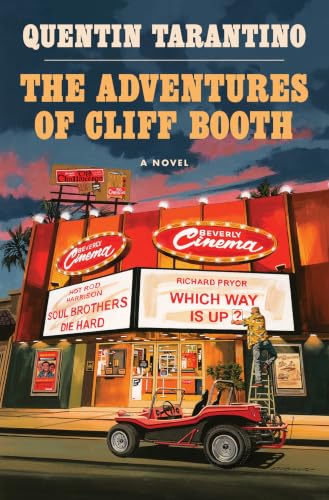
His latest screenplay, The Further Mis-Adventures of Cliff Booth, continues the story of the character introduced in Once Upon a Time in Hollywood. Directed by David Fincher and written by Tarantino, the sequel is set to hit theaters in November, while Tarantino’s novel, The Adventures of Cliff Booth, will follow in December and is available to preorder on Amazon now.
From the early scripts that launched his career to the stories that became some of his most celebrated films, here are the best Quentin Tarantino screenplays and novels to read for a behind-the-scenes look at the stories behind some of his most iconic films.
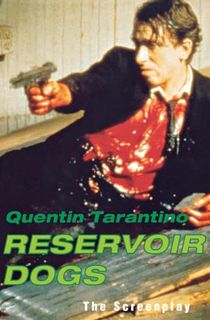
Reservoir Dogs
Tarantino’s directorial debut began as a screenplay he planned to make for just $30,000 with friends. But a chain of personal connections helped the script reach actor Harvey Keitel, who immediately wanted to be involved.
Keitel’s participation brought $1.5 million in financing and helped transform the project into a major independent film.
The story follows a group of criminals after a jewelry heist goes disastrously wrong, as suspicion grows that one of them is an informant.
Filled with sharp dialogue, dark humor, and sudden bursts of violence, Reservoir Dogs introduced the distinctive voice that would define Tarantino’s career.
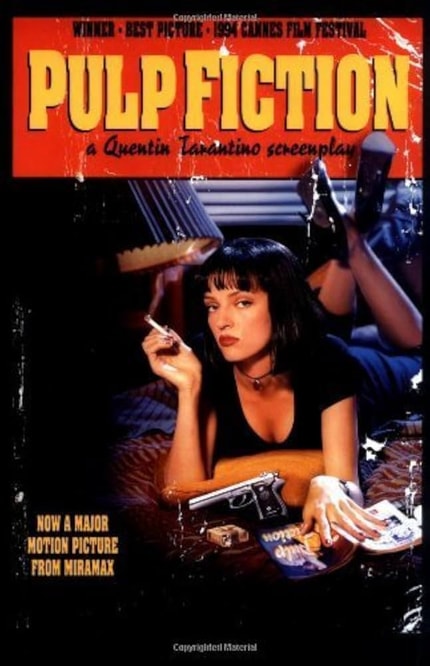
Pulp Fiction
Winner of the Academy Award for Best Original Screenplay and the Palme d’Or at Cannes, Pulp Fiction exploded onto screens in 1994 with a nonlinear structure that helped redefine contemporary crime cinema.
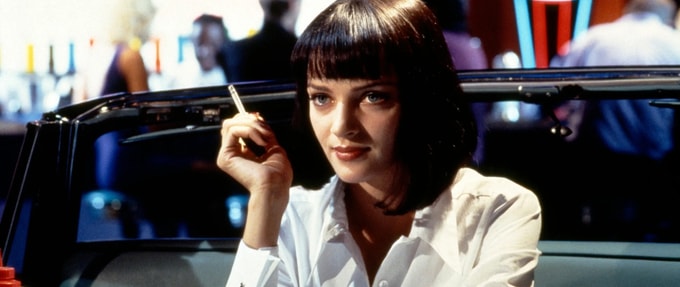
Tarantino’s screenplay weaves together three interconnected Los Angeles crime stories, following hitmen Vincent Vega and Jules Winnfield alongside characters including Mia Wallace and Captain Koons.
Inspired by the pulp magazines of the 1930s and ’40s, the script jumps between seven narrative sequences, allowing characters and events to intersect in unexpected ways.
The screenplay also showcases Tarantino’s sharp dialogue, dark humor, and distinctive approach to character. His eclectic soundtrack, assembled largely from his own record collection, became equally influential, with Dick Dale’s “Miserlou” becoming an instantly recognizable musical signature of the film.
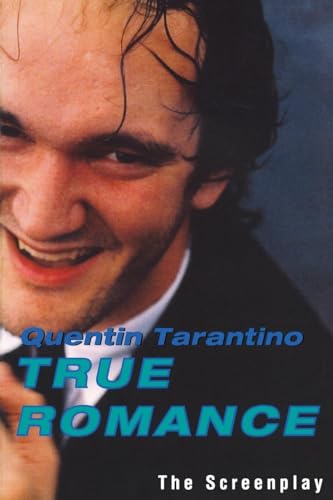
True Romance
Written by Tarantino while he was still working at Video Archives, True Romance was one of his earliest screenplays—and the script he sold to help finance Reservoir Dogs.
Directed by Tony Scott, the film follows comic-book store clerk Clarence and sex worker Alabama, who fall in love and flee to Los Angeles with a suitcase of cocaine stolen from Alabama’s former pimp.
Their road trip quickly puts them between the police and the Sicilian gangsters who want their drugs back.
Scott largely preserved Tarantino’s dialogue and characters, but changed the screenplay’s nonlinear structure and original ending. This edition presents Tarantino’s original screenplay, offering a look at the story before Scott brought it to the screen.
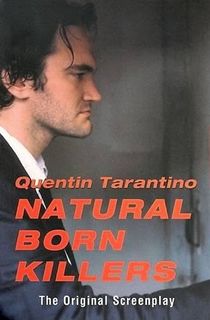
Natural Born Killers
Originally written by Tarantino as a smaller-scale crime story about outlaw lovers Mickey and Mallory Knox, Natural Born Killers was later heavily rewritten by director Oliver Stone into a manic satire of media violence and celebrity culture.
The screenplay follows the couple as they embark on a murderous spree and become glorified by the tabloid media.
The story originated from a massive 500-page screenplay titled The Open Road, co-written by Tarantino and Roger Avary in 1987, which eventually became the basis for both Natural Born Killers and True Romance.
Because Stone’s film departed so significantly from his original vision, Tarantino removed his name from the screenplay credits. This edition presents his original screenplay, offering a chance to compare his version with the film that reached the screen.
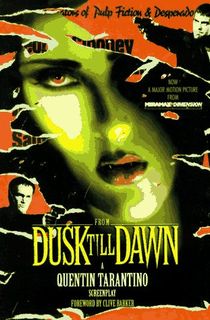
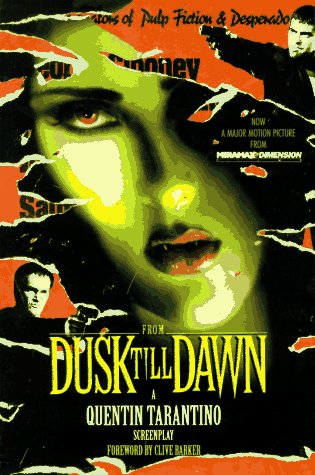
From Dusk Till Dawn
Written by Tarantino and directed by Robert Rodriguez, From Dusk Till Dawn follows bank-robbing brothers Richie and Seth Gecko as they take a family hostage and flee across the Mexican border.
Their plan to meet their criminal contacts takes a bizarre turn when they stop at a remote strip club and discover that its patrons are vampires. What begins as a violent crime story suddenly transforms into an action-horror battle for survival, blending Tarantino’s crime-film sensibilities with Rodriguez’s genre filmmaking.
Released in 1996, the film stars George Clooney, Harvey Keitel, Juliette Lewis, Salma Hayek, and Tarantino himself as Richie Gecko.
The screenplay also traces back to The Open Road, the massive script Tarantino co-wrote with Roger Avary before it was divided into True Romance and Natural Born Killers.
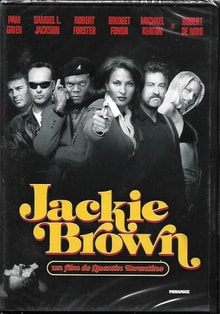
Jackie Brown
Tarantino’s Jackie Brown marked his first and only adaptation of a novel, based on Elmore Leonard’s Rum Punch.
The screenplay follows Jackie Brown, a flight attendant who smuggles cash for arms dealer Ordell Robbie until she is caught by federal agents in a sting operation targeting him. Facing prison, Jackie agrees to help the agents bring Ordell down, while secretly plotting a way to escape the scheme with enough money to start over.
Starring Pam Grier and Samuel L. Jackson, the film allowed Tarantino to pay homage to the blaxploitation films of the 1970s while taking a more restrained approach than his earlier work.
Indie Film Hustle stated that the “film was met with modest commercial success, a warm critical reception, and indisputable proof that Tarantino wasn’t a one-trick pony.”
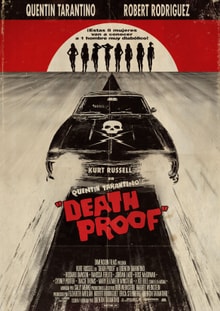
Death Proof
Tarantino’s Death Proof puts his own spin on the exploitation and slasher films of the 1960s and ’70s.
In Austin, Texas, DJ Jungle Julia heads out for a night with her friends Shanna and Arlene, unaware that they have caught the attention of Stuntman Mike, a scar-faced stunt driver with a powerful muscle car and a deadly secret.
What begins as a night of drinking, dancing, and sharp-edged conversation takes a terrifying turn when Mike uses his “death-proof” car to stalk his unsuspecting victims.
Packed with electric dialogue, muscle cars, and pulse-pounding action, the screenplay deliberately embraces the rough, playful spirit of the exploitation cinema that inspired Tarantino.
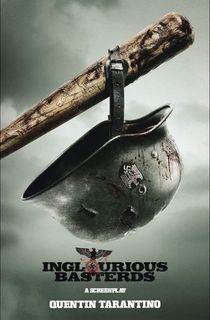
Inglourious Basterds
Tarantino’s World War II epic follows two parallel missions of revenge against Nazi Germany.
In occupied France, Lieutenant Aldo Raine leads a squad of Jewish-American soldiers known as the “Basterds,” who hunt down Nazis behind enemy lines.
Meanwhile, Shosanna, a young Jewish woman living in hiding, plots her own operation against Nazi officials while running a Paris movie theater.
Their stories converge at a propaganda film screening, setting the stage for a violent attempt to change the course of the war.
Starring Brad Pitt, Christoph Waltz, Diane Kruger, Michael Fassbender, and Mélanie Laurent, Inglourious Basterds earned eight Academy Award nominations, including Best Picture and Best Director, with Waltz winning Best Supporting Actor.
The film was also Tarantino’s highest-grossing film at the time, and he later called the screenplay his “masterpiece” and “my best script” on the Church of Tarantino podcast.
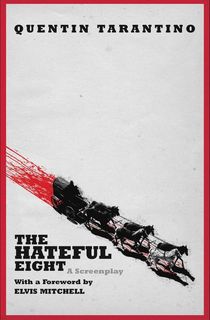
The Hateful Eight
Set in post-Civil War Wyoming, The Hateful Eight follows bounty hunter John Ruth and his fugitive captive Daisy Domergue as they race toward the town of Red Rock. When a blizzard forces them to take shelter at a remote stagecoach stop, they're joined by six strangers, including another bounty hunter, a supposed sheriff, and a former Confederate general.
As the storm rages outside, tensions rise among the eight travelers, who soon realize that not everyone is who they claim to be.
Released in 2015, Tarantino’s dark Western unfolds almost entirely within the isolated cabin, building suspense through razor-sharp dialogue, suspicious characters, and escalating violence.
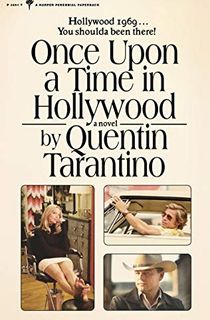
Once Upon a Time in Hollywood
Tarantino’s first published novel, a #1 New York Times Bestseller, expands the world of his 2019 film Once Upon a Time in Hollywood, returning to the fictional Hollywood of 1969.
The story follows Rick Dalton, a fading television star struggling to transition to film, and his stunt double Cliff Booth, whose mysterious past has made him infamous on movie sets.
Alongside them are real figures including Sharon Tate and Charles Manson, as Tarantino revisits the Hollywood and counterculture of the late 1960s through his own revisionist lens.
With new scenes, character backstories, and glimpses into the movies and people that shaped this world, the novel fills in details that could only be hinted at on screen, offering an entirely new perspective on the story readers thought they knew.
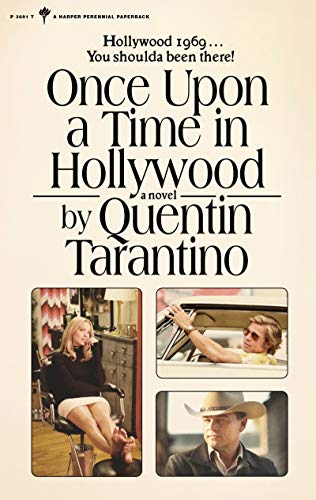
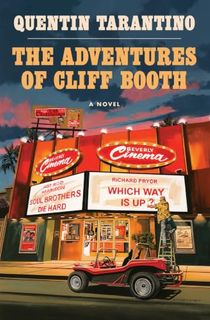
The Adventures of Cliff Booth: A Novel
Tarantino returns to one of his most iconic characters in The Adventures of Cliff Booth, his new novel set nearly a decade after Once Upon a Time in Hollywood.
It’s 1977, and the swinging ’60s are long gone, but Cliff Booth is still making his way through Hollywood as a war hero, stuntman, bartender, and cinema projectionist, with the occasional “clandestine services” for friends.
The novel follows Cliff through a new chapter of his life, expanding the character beyond his role in Tarantino’s Oscar-winning film.
Soon to be a major motion picture directed by David Fincher, the novel offers the latest chapter in the story of one of Tarantino’s most memorable creations.