
Modern detective fiction increasingly rejects black-and-white morality, reflecting a broader 21st-century literary trend of genre-blending and complex characterizations. Ergo, the morally gray detective.
Or more specifically, a blend of gritty crime fiction, noir/hardboiled fiction, and psychological drama.
While still satisfying the core intellectual puzzle of a mystery, we also get the messy emotional realism of a character study, forcing the audience to question whether the ends justify the means and producing a deeply human narrative.
We see ourselves in people who make selfish choices for understandable reasons, and that candor is replicable in detectives who aren't ultimate do-gooders and in nuanced criminals who aren't just categorized as bad people who do bad things. And since a morally fixed character can only react in so many ways, gray detectives and their cases are just that much more surprising.
Ultimately, morally gray crime fiction endures because it reflects the truth that pursuing justice within fundamentally flawed systems is not easy, and the people who pursue it are not perfect.
These eight novels remind us that the desire to do good doesn't absolve the ability to cause harm or the responsibility that comes with living with the consequences.
Here are some of crime fiction's most interesting morally gray detectives!
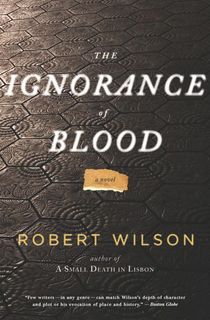
The Ignorance of Blood

Set in a sweltering Seville, Inspector Jefe Javier Falcón is under immense pressure to track down the perpetrators of a devastating terrorist attack from Wilson’s previous entry in the series, The Hidden Assassins. Things shake up when a Russian gangster dies in a car crash, revealing evidence implicating the Russian mafia.
Falcón’s investigation is pulled into a violent turf war over drugs and prostitution, and his personal life becomes simultaneously entangled with Islamist extremists and international operations in Morocco and London, involving his best friend and lover.
In a 2009 interview with Crime Time, Wilson mentions his motive for the novel was to probe: “How do ordinary people respond to the sudden intrusion of this dark world?”
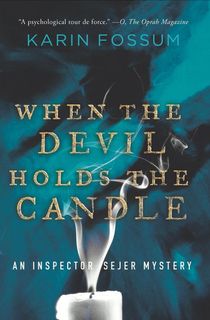
When The Devil Holds The Candle
When Zipp and Andreas steal a purse from a stroller and inadvertently cause an infant’s death, they remain unaware and move on to their next crime—following an elderly woman named Irma Funder home to rob her. Zipp waits for Andres outside her house, and Andres never returns.
Inspector Konrad Sejer and his colleague Jacob Skarre see no connection between the infant’s death and the delinquent’s disappearance. As the outside confusion mounts, the chilling truth unfolds inside Irma’s home.
Sejer empathetically digs deeper than small-town tranquility to understand how and why violence destroys everyday lives.
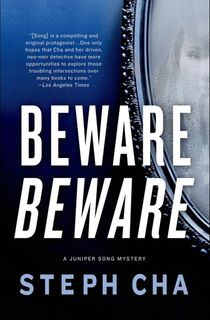
Beware Beware
Juniper Song is an apprentice P.I. who’s assigned to keep an eye on client Daphne Freamon's boyfriend.
Daphne lives in New York as a wealthy painter, and her boyfriend lives in Los Angeles as a freelance screenwriter, ghostwriting a vanity project for aging movie star Joe Tilly. When Tilly is found dead in a hotel room and Jamie becomes the prime suspect, Song is now tasked with finding the true killer and begins questioning grieving insiders.
As Song begins to uncover the heaps of blackmail, hidden identities, and dark histories of Hollywood violence, her core values are repeatedly tested and compromised in ways that leave deep psychological marks.
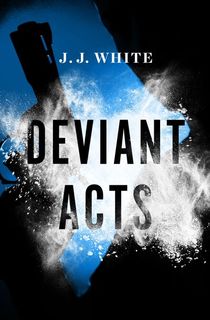
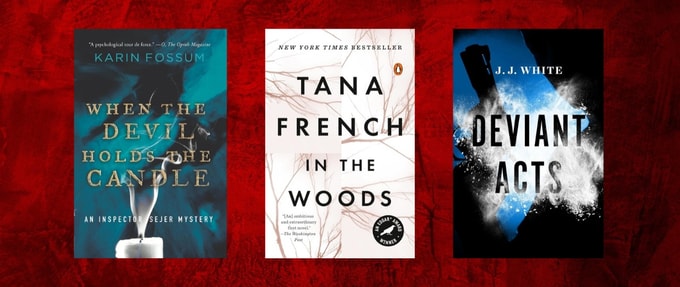
Deviant Acts
Jackson Hurst is a former Marine and Vietnam War veteran who lost his job and girlfriend after developing a heroin addiction. When his Vermont millionaire aunt Camille proposes to hire Jackson as a Private Investigator to track down and rescue her 20-year-old daughter Cheryl from kidnappers, Jackson needs the money too much to refuse.
Cheryl will pay anything to get her daughter back, but she also wants the kidnappers dead, and Jackson must figure out how to stay clean while wrestling with his traumatic past and deciding if he can kill again.
Can extrajudicial killing be morally justified when dealing with brutal criminals? And to what degree is a severely traumatized individual morally responsible for the violent actions they commit?
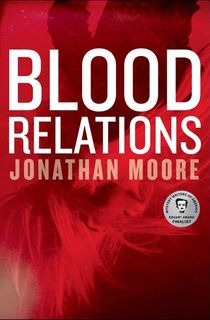
Blood Relations
PI Lee Crowe finds Claire Gravesend dead in a cocktail dress on top of a Rolls-Royce in the most dangerous San Francisco neighborhood. Claire’s mother, Olivia, is one of California’s richest and doesn’t buy the suicide ruling, hiring Crowe, who’s just fumbled a federal case against a cartel kingpin.
But when Olivia won’t explain the scars found in Claire’s autopsy and Crowe runs into an armed intruder at Claire’s Boston townhouse, he’s ultimately led to Claire’s secret San Francisco pied-à-terre, and in it, a very alive Claire.
Crowe leads us into the disturbing lengths the powerful will go to achieve eternal youth and a starkly bleak environment where conventional morality is scarce.

The Dark Remains
When Mob lawyer Bobby Carter is found dead in the back alley behind a pub under the wing of a local crime boss, the fragile equilibrium between two rival Glasgow crime bosses is broken.
Jack Laidlaw is a maverick Detective Constable with a sixth sense for crime, and while his boss attributes Carter’s death to typical rivalry fallout, Laidlaw knows that’s not the case.
Although Laidlaw tends to ignore orders and operate independently, he understands how socio-economic surroundings influence one’s choices and actions and brings that insight into every case.

When Will There Be Good News?
On a hot summer day, Joanna’s life is forever changed during a slow walk home along a country lane.
30 years later, ex-detective Jackson Brodie is on a crowded late train when he hears a shocking sound.
16-year-old Reggie is watching television after a long day when a terrifying noise ruins her peaceful evening.
Set in and around Edinburgh, these three lives come together in deeply thrilling ways and ask, “How much are we governed by circumstances beyond our control?" It is impossible, Atkinson argues, to take any action in a vacuum, to live your own life not completely bound up in the lives of others” (The Guardian).
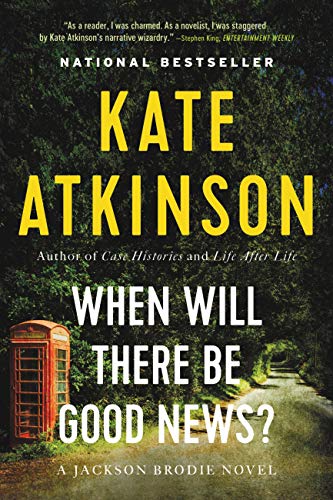

In the Woods
In 1984, three children from a small Dublin suburb go missing in the local woods. When authorities search the area, they find only one child clutching a tree in catatonic terror, wearing blood-filled sneakers and suffering from complete amnesia regarding what happened to him and his two missing friends.
20 years later, Rob Ryan is a detective on the Dublin Murder Squad who hides his traumatic childhood history, and Ryan is assigned to investigate the murder of a 12-year-old local girl found in the very same woods where his friends vanished.
Ryan is the ultimate morally gray detective. He’s purely self-serving and self-aware, fighting to remember what happened in the woods that night, and is consequently an extremely unreliable narrator.


